Why Does My Furnace Smell When I Turn It On for the First Time?
Why Does My Furnace Smell When I Turn It On?
A brief dusty or slightly burnt smell can be normal when you turn on your furnace for the first time after several months. Dust settles on furnace components and inside the heating system while it is inactive. When those surfaces warm up, the accumulated dust produces an odor that should begin fading relatively quickly.
Not every furnace smell is harmless. An odor resembling melting plastic, burning electrical components, overheating equipment, or rotten eggs requires a different response. A smell that grows stronger, returns during every heating cycle, or continues instead of fading should also be investigated.
The type of odor and how long it lasts can help you decide what to do next. A temporary dusty smell may only require observation, while other odors mean the furnace should be turned off or the home should be evacuated immediately.
Why Your Furnace Smells Dusty on the First Heating Cycle
A dusty furnace smell is common at the beginning of the heating season. During spring and summer, dust can settle on the burner assembly, heat exchanger, registers, and other surfaces that have not been heated for months. The first heating cycle warms that dust and sends the odor through your vents.
This smell should be mild and begin dissipating as the furnace runs. You may notice it throughout the home because the blower distributes heated air through the ductwork. Starting the season with a clean furnace filter can reduce the amount of dust circulating through the system, but it may not eliminate the initial odor completely.
Pay attention to whether the smell improves or becomes more intense. A normal first-cycle dust smell should not keep returning at the same strength, produce visible smoke, smell like melting material, or continue through repeated heating cycles. If the odor does not fade, turn the furnace off and schedule an inspection.
Electrical Burning Plastic & Overheating Furnace Odors
A burning-plastic or electrical odor is not the same as dust warming on the furnace. These smells may indicate damaged wire insulation, an overheating blower motor, a failing control component, or another part becoming hotter than it should.
Warning signs that point beyond normal first-cycle dust include:
- A sharp smell resembling hot wiring or electronics
- An odor similar to melting plastic or rubber
- A burning smell that becomes stronger as the furnace runs
- Visible smoke near the furnace or from a vent
- Unusual buzzing, humming, grinding, or repeated shutdowns
- Weak airflow occurring at the same time as the odor
- A furnace cabinet or nearby area that seems unusually hot
Turn the furnace off if you notice an electrical, plastic-like, or persistent overheating smell. Do not keep restarting the system to see whether the odor disappears. A NATE-certified technician should inspect the electrical controls, wiring, blower assembly, airflow, and other components before the furnace is returned to normal use.
What a Rotten Egg or Gas Smell Means
A rotten-egg or sulfur smell may indicate natural gas. Natural gas is given a distinctive odor so a possible leak can be recognized, and the smell should never be treated as normal furnace startup behavior.
If you smell natural gas:
- Leave the home immediately and warn others as you exit
- Do not operate light switches, thermostats, appliances, garage-door openers, or anything else that could create a spark
- Do not use a phone while you are still inside the affected area
- Do not try to locate or stop the leak yourself
- From a safe location, call 911 and Nicor Gas
- Stay away until emergency personnel say it is safe to return
Do not attempt to turn the furnace off before leaving if doing so requires operating an electrical control or approaching the suspected leak. Emergency responders and the gas utility will determine whether a leak is present and when the property is safe to enter. Furnace repairs can be addressed after the immediate gas-safety concern has been resolved.
Musty Furnace Odors & Smells That Do Not Fade
A musty odor may point to moisture, a dirty filter, or buildup within part of the HVAC system. Because the same ductwork can serve both heating and cooling equipment, moisture near an indoor coil, drain, filter, or duct component may become noticeable once air begins circulating again.
Changing a visibly dirty filter may help when the odor is connected to restricted airflow or accumulated debris. However, replacing the filter will not correct moisture inside the equipment, growth in the ductwork, an overheated component, or debris lodged farther inside the system.
Any odor deserves professional attention when it remains after the initial startup period, returns with every heating cycle, or appears alongside poor airflow, unusual noises, frequent shutdowns, or inconsistent heat. Masking the smell with an air freshener does not address its source and may make it harder to recognize whether the problem is becoming worse.
What to Do Before You Run the Furnace Again
Start by identifying the general type of smell without opening the furnace cabinet or touching internal components. Note whether the odor is dusty, musty, electrical, plastic-like, or similar to rotten eggs. It also helps to remember when the smell began, where it is strongest, whether it fades, and whether the furnace is making unusual noises.
If the odor is mild, dusty, and limited to the first heating cycle, monitor it while the system runs and confirm that the filter is not visibly clogged. Keep supply registers and return vents clear so the furnace can circulate air properly. Stop the system and call for service if the odor strengthens or does not begin fading.
For electrical, plastic-like, or overheating odors, turn off the furnace and schedule professional repair before using it again. For a rotten-egg or suspected natural-gas smell, skip troubleshooting entirely: leave immediately and contact Nicor Gas and 911 from a safe location.
Get 24/7 Furnace Repair in Orland Park & Chicagoland
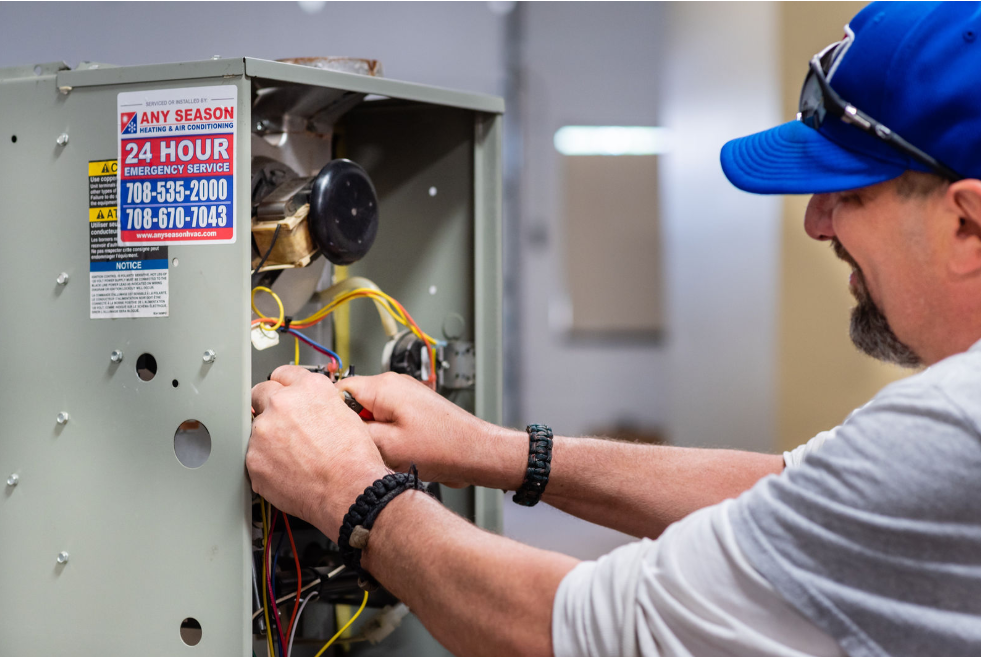
Any Season Heating & Air Conditioning provides same-day furnace repair in many cases and 24/7 emergency service when a heating problem cannot wait. Our NATE-certified technicians bring more than 25 years of HVAC experience to diagnosing electrical problems, airflow restrictions, overheating components, ignition failures, and other causes of unusual furnace odors.
Contact Any Season Heating & Air Conditioning when you need furnace repair in Orland Park, New Lenox, Homer Glen, Frankfort, or elsewhere in Chicagoland. Describe the odor and any other symptoms you noticed so our team can prepare for the service call.